

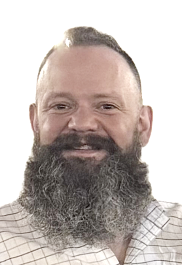
Tell us about yourself.
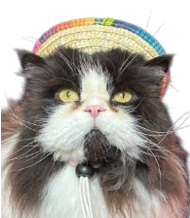
Hi, I’m Jon. I am a psychologist living in Dayton, Ohio, USA. I have been in practice for 12 years and work with adults who have histories of abuse and neglect (mostly DID, OSDD and CPTSD). I teach and supervise doctoral students and psychology residents who are learning to treat complex trauma and dissociation. My wife, Courtney, and I are parents to a sweet / demanding geriatric Persian cat named Louie (see photo – cat, not wife)
How did you first learn about dissociation, and who are the experts in the field who have had the greatest influence on you?
I began to formally learn about dissociation in grad school (while taking a class taught by past ISSTD president Steve Gold). Gradually (and sometimes abruptly), I came to discover that challenges I encountered from childhood through early adulthood were related to my own dissociative experiences. Initially, I found it unfeasible to work effectively with related conditions, but access to the right kind of personal therapy was instrumental in getting to a place where I could be effective in helping others with similar challenges. Starting out, the writings of Donnel Stern, Richard Kluft, Phillip Bromberg, Shelly Itzkowitz and Elizabeth Howell were invaluable. Learning ego state therapy from Wendy Lemke, and, more recently, deep brain reorienting from Frank Corrigan has also been very helpful.
What led you to join ISSTD?
I attended an annual conference while in grad school, but it took me a few years to decide to join. As is likely familiar to a number of readers, once a sizeable percentage of my caseload was DID/OSDD, I realized I needed help! Since then, I have learned so much from attending events, conversing with other members, reading the forums, JTD & ISSTD News.
What are your volunteer roles with ISSTD, and what led you to volunteer?
I serve as president-elect on the Board of Directors; Co-Chair, with Elizabeth Davis, of the Membership Committee; Chair of the Research SIG; and Chair of the Midwest ROC. For five years, I co-chaired the Awards Committee with Ben Israel, MD, and I continue to volunteer on that committee, as well as on the Scientific, Annual Conference, and Caul Grant Committees. Recently, Elizabeth Davis and I became Co-Chairs of the Lived Experience Task Force, which we inherited from President Abigail Percifield. We are in the process of developing a series of initiatives connected to the Board’s 2027–2029 strategic plan, with more details to come soon.
Before joining ISSTD, I served on the boards of state, regional, and national psychological associations. Those roles were meaningful and taught me a great deal, but I found myself spread too thin and not focused on topics I was truly passionate about. A few years ago, I decided to go “all in” as a volunteer here.
What have you been up to lately?
Last fall, I opened a specialty clinic and educational center called Collective Within (https://collectivewithin.com). We have been growing in fits and starts; there was a lot of physical construction at first, followed by recruiting, establishing a referral network, and wrangling credentialing and billing. While there are still bumps in the road, things are beginning to stabilize. We now have 10 clinicians, including a resident and three doctoral students, and have been hosting some exciting in-person training events featuring ISSTD members like Wendy Lemke, Joanne Twombly, Chris Vavro, and Ed Groenendal (who is driving in from Chicago next month).
Research-wise, I’ve been on hiatus, but am excited for one of my doctoral advisees, Will Sampson, M.S., who recently received IRB approval for his project focusing on reducing depersonalization using immersive greenspace VR technology (hoping his annual conference proposal will be accepted). He will be running trials at Collective Within.
In a few months, I will be giving a talk at the Toronto Regional Conference on working with conversion/functional neurological symptoms. While I have not conducted empirical research in this area, I have been digging through the relevant literature these past few years while working with some interesting cases. Looking forward to sharing what I’ve learned.
Tell us something most of us may not know about you
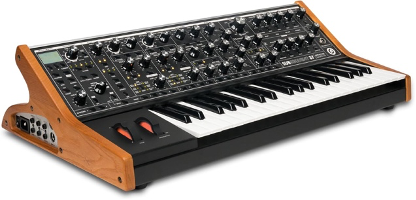
Outside of clinical work, my favorite thing to do is collecting and tinkering with synthesizers (electronic musical instruments). The process of shaping, modulating, layering and sequencing sounds is very absorbing (hours seem to vanish), and the experience of generating textures that resonate with inner states can be very cathartic. Here is a picture of one of the loves of my life, Moog Subsequent 37