

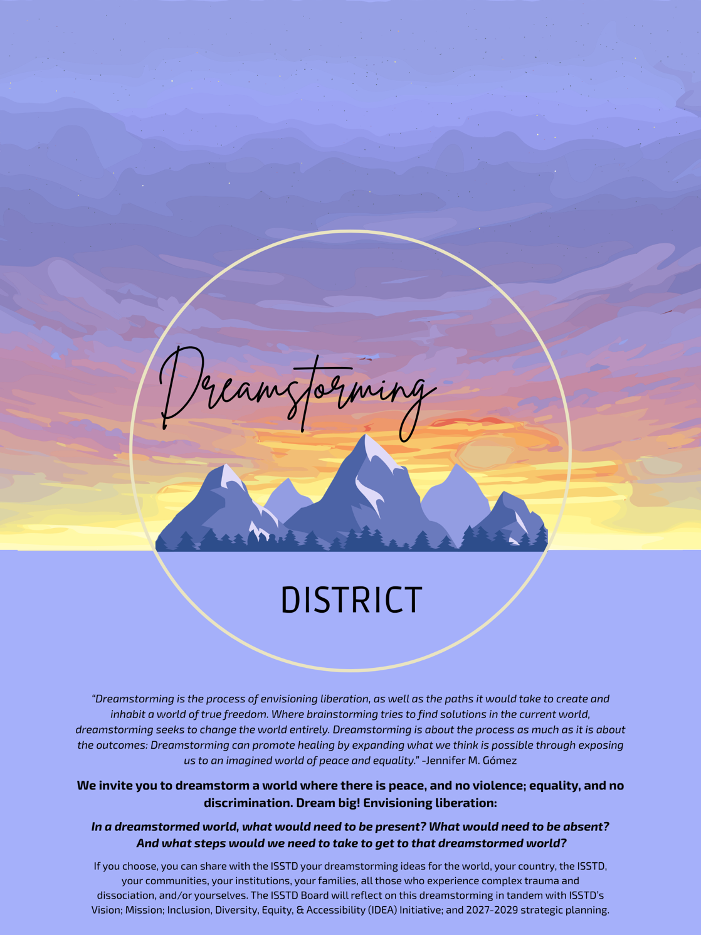
At the Annual Conference this year, we asked attendees to engage in dreamstorming with us. This concept, coined by Jennifer Gómez (2023), describes dreamstorming as a process in which we collectively imagine what it would look like and what would need to happen to make our dreams our world. We’ve started reviewing all that was submitted as a Board and incorporating these visions into our discussions as we engage in strategic planning. It was so heartening to read all the different dreams that were submitted. For my letter this month, I decided to write a little dream story inspired by what was submitted by our wonderful conference attendees. Thank you all for the inspiration.
They awake in the morning filled with a sense of excitement and anticipation. It is the morning of their first ISSTD conference, and it is a particularly special one, as it is the first year that all expenses for conference attendees are funded through mental health grants that have been made widely available to mental health organizations around the world. Their morning begins with a nutritious breakfast outside, and they softly smile as they see other conference attendees already down in the green courtyard, eating, meditating, and connecting with nature and all that is around them. They are welcomed when they sit next to strangers and the conversation that unfolds reminds each of just how wondrous a creature they are.
They discover others who are attending a morning workshop on communal grieving and decide to have lunch with another group going to a workshop on restorative justice models, curious about what is unfolding in multiple spaces at once. As they make their way into the room, they see an assortment of professionals, faces from all over the world, a range of skin tones, languages, and ways of being, clothing chosen for sustainability and comfort, and the freedom to wear whatever one sees fit without judgment. They overhear as they are settling that it is not just mental health professionals in attendance, but also community leaders, peer supporters, religious leaders, lawyers, educators, and more. The conversations move easily between attendees, the connections between them simply understood.
They sit on a pillow on the floor and pull out both their embroidery and their notebook, beginning to listen and to feel with those around them. They are struck by how complex working with the spirits of living creatures can be and how it is a process that unfolds over time, like all things in nature must. And yet hope is ever present in the way people move with one another, in the way care is assumed.
The evening comes, and they are walking down a sidewalk as bikes pass and public transit moves community members through the city. The roads and sidewalks weave as cities have been redesigned to allow for habitat restoration, and the presence of nature imbues the space with life. The space is quiet and dim, yet the moon shines bright and the stars can be seen, and they feel inherently safe walking alone at night, nibbling on berries that grow in the community gardens that are woven throughout the city and free to all. A friend they just made this morning waves to them from down the street, and before long they are walking with a group to a community dance performance. They feel connected. They feel seen and safe. They feel joyous. And when they fall asleep that night, they dream of a world still becoming, still asking something more of all who live within it.
References
Gómez, J. M. (2023). Is academia a dreamkiller? Inside higher ed (conditionally accepted blog). https://www.insidehighered.com/opinion/career-advice/2023/08/25/moving-liberatory-thought-liberating-action-higher-ed-opinion