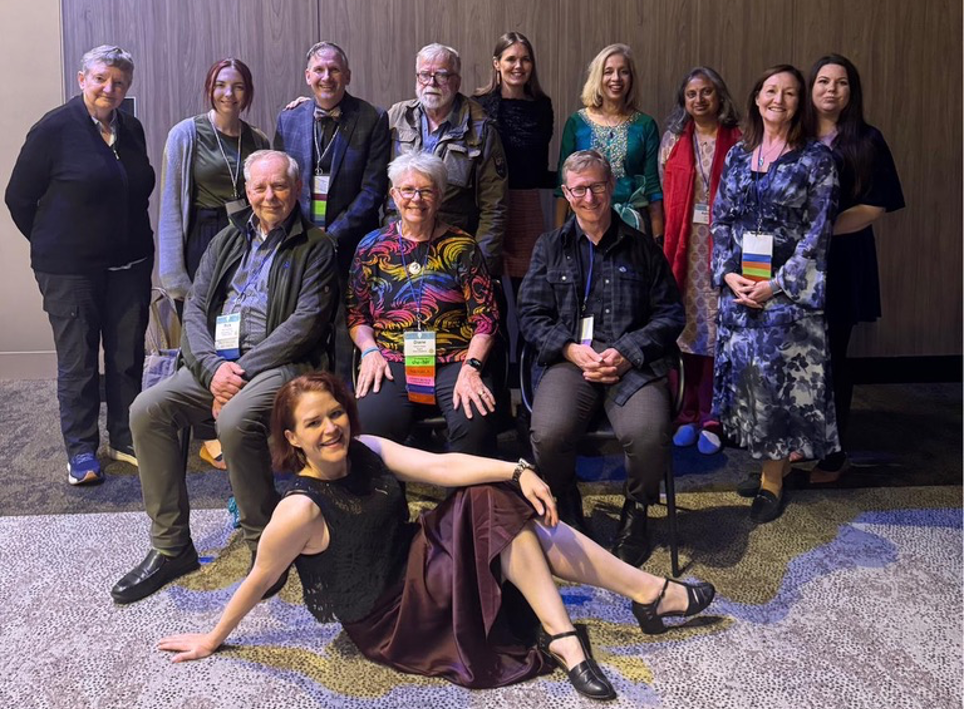
As Honours students who just presented at our first ISSTD Regional Conference in Wellington, we want to share why this experience was so different to what we’d imagined an international academic conference would be—and why students working in trauma and dissociation should absolutely participate in this community.
We are Shalini Watson and Tenarra Campey, Honours students working within Dr. Mary-Anne Kate’s research program at Southern Cross University, Australia. Dr. Kate, an ISSTD Scientific Committee member who also served on the Wellington conference organising committee, leads research on trauma, dissociation and neurodiversity. We both undertook Honours Psychology under her supervision, though we come from different starting points: Shalini holds a PhD in Educational Technology and spent 12 years supporting neurodivergent university students—experience that sparked her interest in trauma–dissociation–ADHD intersections. Tenarra is a behavioural support practitioner working with neurodivergent clients with complex needs, conducting her first research project on dissociation and autistic camouflaging.
Our Honours research explored intersections that matter deeply for clinical practice: childhood trauma, dissociation, and neurodivergence. Shalini investigated the trauma-dissociation-ADHD pathway, while Tenarra examined autistic camouflaging and dissociation.
Presenting this work at ISSTD Wellington revealed something unexpected about the community itself. We came to Wellington expecting to present posters and just observe from the margins. What we experienced was far more than observation: it was genuine engagement from senior researchers whose papers we’d been citing all year and clinicians actively working with the populations we were studying.
Meeting the Mentors and Thought Leaders
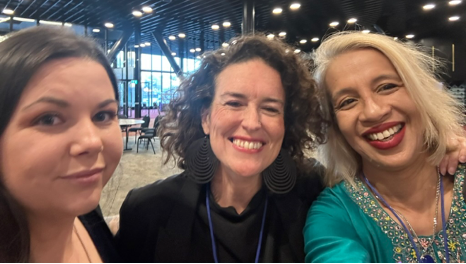
One of the most unexpected gifts of this experience was meeting researchers and clinicians whose work had shaped our thinking throughout Honours. What researchers like Warwick Middleton, Martin Dorahy and the wider ISSTD community demonstrated so well is that genuinely valuing all voices, from leading experts to emerging researchers, enriches the entire field.
Jes Hill’s keynote on gendered violence, child maltreatment, and coercive control was profoundly moving and showed us how trauma research bridges into real-world practice. As students often working in isolated academic bubbles, seeing this connection between research, journalism, and advocacy helped us grasp the tangible impact our work could have.
Our Research Projects
Although our projects were different, they spoke to the same core question: How do trauma, dissociation, and neurodivergence intersect in ways that are often missed?
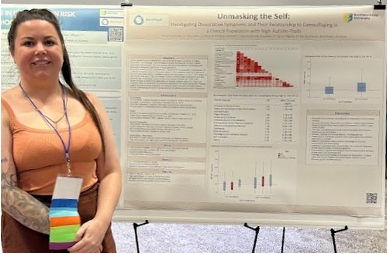
Tenarra’s Honours research examined the relationship between autistic camouflaging (masking or hiding autistic traits to “fit in”) and dissociation. Her research showed that people who spend a lot of effort camouflaging their autistic traits often report high levels of dissociation.
Several researchers and clinicians approached her to discuss the overlaps between neurodivergence and trauma, and how chronic camouflaging can become a survival strategy with psychological costs. Those conversations helped her see that this is not just an “interesting topic” – it has direct implications for how autistic clients are assessed, conceptualised, and supported.
Shalini’s Project: Trauma, Dissociation and ADHD “Hidden in Plain Sight”
Shalini’s Honours thesis was among the first Western studies to examine childhood trauma, dissociation, and ADHD together in a clinical sample, identifying dissociation as a critical link between trauma and ADHD symptoms. Dissociation proved a stronger predictor of ADHD symptoms than trauma alone, acting as the critical pathway between childhood trauma and adult ADHD.
This finding has important clinical implications: treatment-resistant ADHD may actually reflect unrecognised trauma-related dissociation, suggesting clinicians should routinely screen for trauma and dissociative symptoms when assessing ADHD.
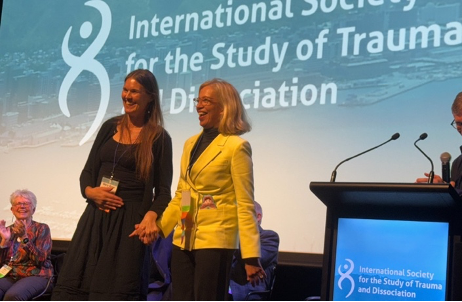
Her poster, Hidden in Plain Sight: Dissociation as the Missing Link Between Childhood Trauma and Adult ADHD, won the conference poster prize.
Presenting Alongside our Supervisor
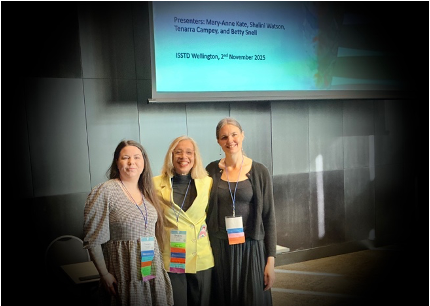
In addition to our individual poster presentations, we had the opportunity to present as Team Dissociation alongside Dr. Kate and other researchers working on these interconnected constructs. This workshop was co-presented with Betty Snell, a mental-health clinician.
The workshop, “Childhood Trauma, Dissociation, and Neurodiversity: Emerging Research and Clinical Reflections,” allowed us to share both of our research findings within a broader clinical context.
The interest in our work – and the broader conversation about how dissociation mediates the trauma-neurodivergence pathway – was genuinely heartening.
Shalini’s segment used the nested doll metaphor to illustrate how dissociation is hidden within the trauma-ADHD relationship, while Tenarra’s research highlighted the psychological costs of chronic camouflaging in autistic individuals.
Co-presenting in a professional workshop alongside our supervisor and a clinician demonstrated how ISSTD actively integrates student voices into the broader professional conversation.
What We’re Taking Home
This conference experience will shape our future academic and professional careers in psychology, particularly through insights gleaned from talking with clinicians. Various clinicians explained how they were time poor and therefore did not have much time to do research, and that they found our research projects provided some alternative explanations to “treatment resistance”. For example, after viewing Shalini’s poster, one clinician shared that they had been treating a client for ADHD for years with limited success. Our discussion about how dissociative amnesia can look like “forgetfulness” or “inattention” made them consider that underlying trauma and dissociation might have been missed.
For us, these conversations reframed what “treatment-resistant ADHD” might mean and underscores the importance of screening for both trauma and dissociation when assessing neurodivergent clients.
Similarly, for Tenarra, it was moving to hear autistic and otherwise neurodivergent people speak about the toll of long-term camouflaging and how validating it was to see this experience reflected in research. Her project helped open up conversations about how services can become more affirming, so that autistic people feel less pressure to mask in the first place.
We’re grateful to our supervisors at Southern Cross University—Dr. Mary-Anne Kate (who supervised both projects) and Dr. Jess Gillies (who co-supervised Tenarra’s research)—for supporting work at the intersection of trauma and neurodivergence, and for connecting us with the ISSTD community. These connections will shape our future careers.
Our Message to Future Students
Unlike many academic conferences where students hover at the margins, ISSTD actively brings emerging researchers into the conversation. Poster sessions weren’t just display opportunities—they became genuine dialogues where world-leading researchers engaged thoughtfully with our work, asked questions, and offered insights that will shape our future research.
If you’re a student researching trauma, dissociation or complex presentations, go ahead and submit a poster abstract. The community is genuinely interested in emerging research, and the conversations you’ll have will shape how you think about your work’s real-world applications.
Don’t let imposter syndrome stop you. Yes, you’ll be in the room with researchers you’ve been citing, but that’s exactly why you should be there: to see how your questions contribute to the broader conversation and to build connections that will support your future work.
For students thinking about attending their first ISSTD conference, a few simple preparations can make a big difference. Make use of student registration rates, look out for any student or early-career events on the program, and come with a two-minute elevator pitch about your project. Most conversations begin with “Tell me about your research”, and having a clear, brief summary ready can turn a quick chat into mentoring, collaboration, or even a future supervisor relationship!